

CAGRIRETA
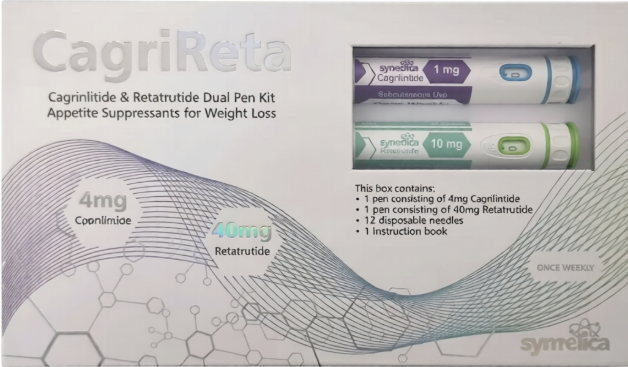
CagriReta™ (Cagrilintide + Retatrutide)
Advanced Multi-Pathway Weight Management Support
CagriReta combines two innovative compounds, Cagrilintide and Retatrutide, designed to target multiple pathways involved in appetite regulation, satiety, and metabolic function. By leveraging complementary mechanisms of action, CagriReta is gaining significant interest within the metabolic health and weight management community.
Retatrutide is a triple-receptor agonist that acts on GLP-1, GIP, and glucagon receptors, while Cagrilintide is a long-acting amylin analogue that works through separate appetite-regulating pathways. Together, they offer a multi-pathway approach that may provide enhanced support for individuals seeking comprehensive metabolic management.
Potential Benefits
- Supports feelings of fullness and satiety
- May help reduce appetite and food cravings
- Supports healthy weight management goals
- Designed to target multiple metabolic pathways simultaneously
- Once-weekly administration format
- Complements a healthy diet and active lifestyle
How It Works
Retatrutide
- Targets GLP-1, GIP, and glucagon receptors
- Supports appetite regulation
- Helps promote metabolic efficiency and energy balance
Cagrilintide
- Mimics the body's natural amylin hormone
- Helps increase feelings of fullness after meals
- Supports portion control and appetite management
Why Choose CagriReta?
Unlike single-pathway approaches, CagriReta is designed to support the body's natural hunger and satiety signals through multiple complementary mechanisms. This innovative combination represents a next-generation approach to metabolic support for those looking to optimise their weight management journey.
Important Information
Cagrilintide and Retatrutide are investigational compounds. Clinical research on the combination is ongoing, and no published clinical trial has specifically evaluated the combined use of Cagrilintide and Retatrutide together. Any benefits described are based on the known mechanisms and individual research data for each compound.